And Then I Went To Egypt

I didn’t grow up with much ritual and ceremony beyond the typical birthday cakes, Sunday barbecues and volleyball, and Christian hymns at funerals. We church-hopped a lot, and sometimes didn’t go at all.
The first time I went with my bestie to her family’s Catholic service, I was in awe. The incense and holy water—the chanting and singing in Latin—I was totally jealous. It was magical and completely mysterious to me.
I knew pretty young, though, that I was uninterested in studying the Bible or attending church, so I developed a spiritual life that, over the years, has pulled from many places. I’ve practiced all kinds of meditation techniques, affirmations, metaphysics, sound and vibrational practices, prayer, rest, stillness, breath, song, and gratitude—so many ways I’ve learned to connect with the Divine.
But I had never used a rattle. And honestly? If you had asked me a few years ago, I probably would have said, “I’m not a rattle person.”
But then I went to Egypt.
And in and out of temple after temple, in ritual spaces so magically designed for sound and ceremony, I found myself steeped in the sacred in a whole new, deeply felt way. I was learning so much through experiencing rituals and sound ceremonies in these holy places that words mostly fail me in describing any of it.
But some of the history I was learning included this: that in the ancient temples, in the rituals of the high priestesses, there was only one instrument that was always allowed into the holy of holies. Just one.
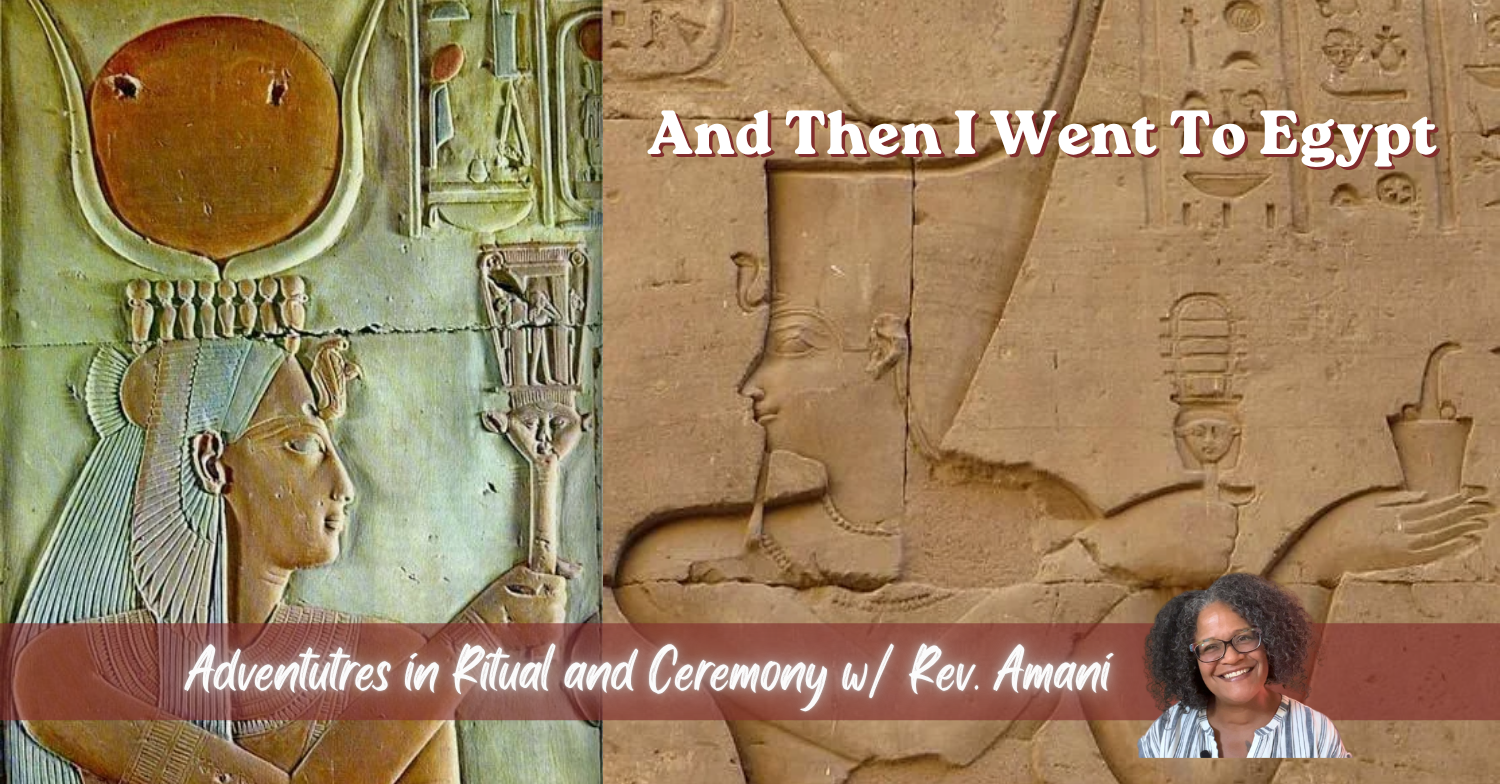
The rattle—the sekhem, or sesheshet in Egyptian. Also known in Greek as the sistrum.
It was used as they processed into ceremony, almost exclusively played by women.
And it wasn’t just music as we think of it today—just entertainment. It was movement. It was invocation. It was a way of shifting energy, calling forward something greater, opening a space.
Huh, I thought. That’s pretty interesting. So I bought one. A beautiful, weighty brass Hathor rattle. I bought it thinking I would gift it to one of my sound healer friends. It felt like something meaningful… but not necessarily something I would use. (Because, you know… “I’m not a rattle person.” Right?)
But during the rituals and ceremonies we held after I bought it, I found myself pulling it out and playing it. It felt so natural in my hand. And it so subtly shifted how I felt—every time I held it, every time I played it. So I kept it.
It sits out on my altar now. And I reach for it often. It never fails to move me and elevate my prayer practice. It vibrates in my body, in the space around me, in my nervous system. When I’m feeling stuck—it loosens—every time.
Sometimes I play it at the beginning of prayer—just to open the space. Sometimes at the end—like sealing something in. Sometimes I shake it up and down my body to move energy or balance me out. Sometimes I use it to emphasize a prayer—shaking it loud and quick—to give it a little more life, a little more sound, a little more yes. And sometimes? I use it just to give thanks with a little more gusto.
I don’t pretend to understand its magic. But it has become a go-to ritual for me—one of my new favorite ways I come home to the Divine in my body and energy. One of the ways I ground and expand, all at once.
It’s funny—I didn’t plan that. I didn’t inherit or design some perfect ritual. I followed this magical thread of curiosity and willingness. And then I followed the feeling.
And I keep following it.
My prayer for you—follow the magical thread of curiosity and willingness and then come tell me all about it.